5G vs 6G: What’s the Difference and When Will 6G Arrive?
Exploring the future of mobile technology: 5G vs 6G.
8 min read • 1,640 words
Table of Contents
Toggle5G vs 6G: What’s the Difference and When Will 6G Arrive?
The evolution of mobile networks has reached a pivotal point with the introduction of 5G, which offers impressive speeds of up to 10 Gbps. However, as technology continues to advance, the focus is shifting towards 6G, a network expected to exceed 100 Gbps. Understanding the differences between 5G and 6G is crucial for consumers and businesses alike, as it will shape the future of connectivity and digital experiences. This article will explore the key distinctions between these two generations of mobile technology, highlighting their capabilities and potential applications.
As we delve into the 5G vs 6G debate, readers will learn about the anticipated launch of the first commercial 6G networks around 2030 and how this next-generation technology aims to revolutionize connectivity. With the potential to enable holographic communication and advanced AI integration, 6G is set to enhance the Internet of Things (IoT) landscape, connecting trillions of devices and prioritizing ultra-reliable low-latency communication.
Introduction to 5G and 6G
5G technology represents a significant leap forward in mobile communication, offering enhanced speed, lower latency, and greater connectivity compared to its predecessors. With maximum download speeds reaching up to 10 Gbps, 5G enables seamless streaming of high-definition content, supports the Internet of Things (IoT) with millions of connected devices, and enhances applications in various sectors, including healthcare, automotive, and entertainment. The ultra-reliable low-latency communication (URLLC) feature of 5G is particularly crucial for applications requiring real-time data transmission, such as autonomous vehicles and remote surgery.
On the horizon, 6G is poised to revolutionize the way we connect and interact with technology. Although still in the early stages of development, 6G is expected to deliver speeds exceeding 100 Gbps, significantly reducing latency to less than one millisecond. This advancement will facilitate immersive experiences such as augmented reality (AR) and virtual reality (VR), enabling users to engage in highly interactive environments. Furthermore, 6G aims to integrate artificial intelligence (AI) more deeply into network management and optimization, ensuring efficient resource allocation and improved user experiences.
Understanding the differences between 5G and 6G is essential for businesses and consumers alike. As industries evolve and new technologies emerge, the capabilities of 6G will likely redefine connectivity standards and open up new possibilities. For instance, while 5G supports smart cities and connected infrastructure, 6G could enable the development of fully autonomous systems that operate seamlessly across various domains.
The timeline for 6G development is projected to span from 2025 to 2030, with initial research and standardization efforts already underway. As we transition from 5G to 6G, it is crucial to stay informed about these advancements to leverage the full potential of future technologies.
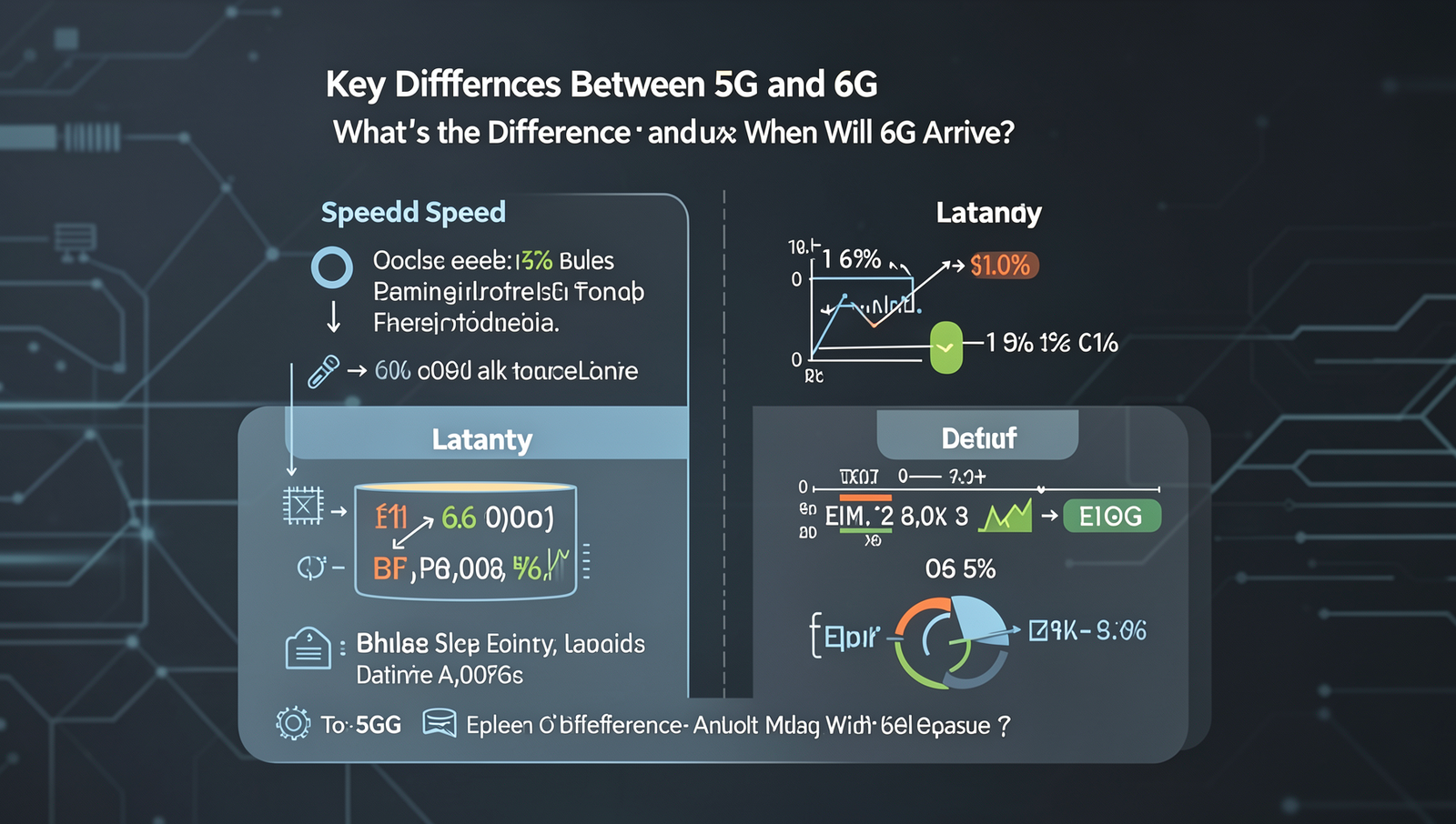
Key Differences Between 5G and 6G
The evolution from 5G to 6G represents a significant leap in mobile communication technology. One of the most notable differences lies in speed and latency. While 5G offers impressive download speeds of up to 10 Gbps and latency as low as 1 millisecond, 6G is expected to push these boundaries even further. Predictions suggest that 6G could achieve speeds of up to 100 Gbps, with latency potentially dropping to less than 0.1 milliseconds. This dramatic improvement will enable near-instantaneous data transfer, enhancing user experiences in various applications.
Another critical distinction between 5G and 6G is the network architecture and infrastructure. 5G networks rely on a combination of macro and small cells to provide coverage, but 6G is anticipated to utilize a more integrated approach, incorporating advanced technologies such as satellite communications and high-altitude platforms. This will facilitate global coverage, even in remote areas, and improve overall network reliability.
- Enhanced Connectivity: 6G is expected to support a staggering number of devices per square kilometer, potentially reaching up to 1 million devices. This increase in device density will be crucial for the Internet of Things (IoT), allowing for smarter cities and more connected environments.
- Unique Applications: With its advanced capabilities, 6G will enable applications that are currently unimaginable. For instance, holographic communication, immersive augmented reality experiences, and real-time remote control of complex machinery could become commonplace.
In summary, the transition from 5G to 6G is not merely an incremental upgrade; it represents a fundamental shift in how we connect and interact with technology. As we look forward to the arrival of 6G, expected around 2030, the implications for industries, economies, and daily life are profound, promising a future where connectivity knows no bounds.

Technological Innovations in 6G
The evolution from 5G to 6G represents a significant leap in telecommunications technology, promising to enhance connectivity and redefine user experiences. One of the most notable innovations in 6G is the introduction of terahertz frequency bands. These frequencies, which lie between microwave and infrared, can support extremely high data rates, potentially exceeding 100 Gbps. This capability will enable applications such as ultra-high-definition video streaming and real-time data transfer for advanced technologies like autonomous vehicles.
Another key advancement in 6G is the integration of artificial intelligence (AI) and machine learning in network management. By utilizing AI algorithms, networks can become more adaptive and efficient, optimizing resource allocation and improving overall performance. For instance, AI can predict network congestion and automatically reroute data to ensure seamless connectivity, thereby enhancing user experiences across various applications.
Edge computing also plays a crucial role in the 6G landscape. By processing data closer to the source, edge computing reduces latency and improves response times for IoT devices. This is particularly beneficial for applications requiring real-time data analysis, such as smart cities and industrial automation. The synergy between edge computing and the Internet of Things (IoT) will enable a more interconnected world, where devices communicate and collaborate seamlessly.
Moreover, 6G holds the potential for groundbreaking applications such as holographic communication and immersive experiences. Imagine attending a virtual meeting where participants appear as holograms, or experiencing live events in a fully immersive environment. These advancements could revolutionize how we interact with technology and each other, pushing the boundaries of communication beyond what we currently envision.
- Terahertz frequency bands for high data rates
- AI and machine learning for network optimization
- Edge computing for reduced latency
- Holographic communication for immersive experiences
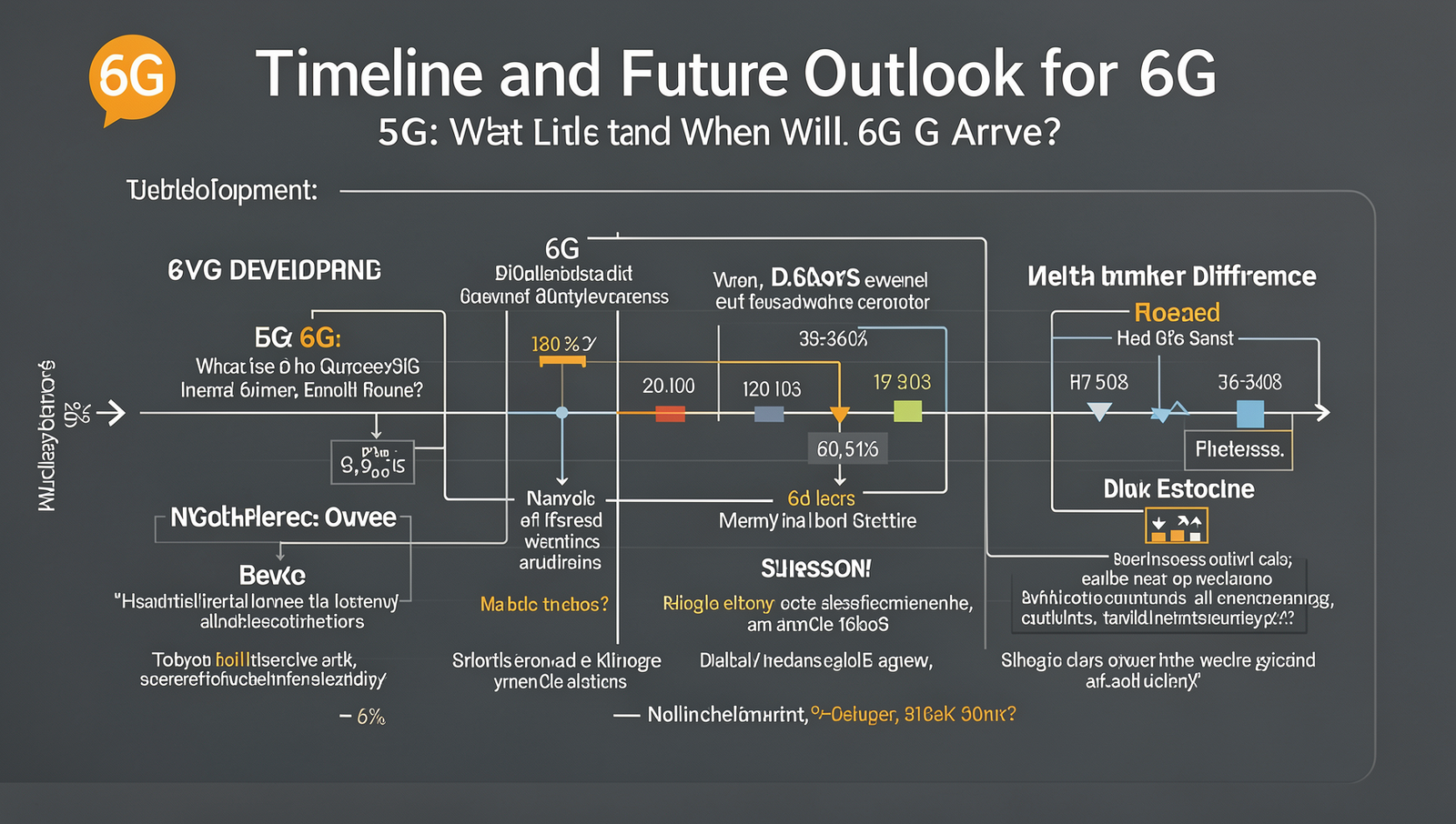
Timeline and Future Outlook for 6G
The current state of 6G research and development is rapidly evolving, with numerous organizations and academic institutions around the world actively exploring the potential of this next-generation technology. While 5G has only recently been rolled out globally, researchers are already envisioning a future where 6G will provide even faster speeds, lower latency, and enhanced connectivity. Key players in the telecommunications industry, including major companies and consortiums, are investing heavily in 6G research, focusing on innovations such as terahertz communication, advanced AI integration, and more efficient spectrum utilization.
Projected timelines for the rollout and commercial availability of 6G suggest that we may see initial deployments as early as 2030. The International Telecommunication Union (ITU) has set a goal to finalize the specifications for 6G by 2028, paving the way for commercial applications shortly thereafter. This timeline indicates that while 5G is still being adopted, the groundwork for 6G is already being laid, with trials and testbeds expected to emerge in the coming years.
However, the journey to 6G is not without its challenges and barriers. Key issues include the need for new infrastructure, the development of compatible devices, and the management of regulatory frameworks. Additionally, the integration of advanced technologies such as AI and machine learning into 6G networks will require significant advancements in both hardware and software capabilities.
- Impact on Industries: 6G is expected to revolutionize various sectors, including healthcare, transportation, and entertainment. For example, telemedicine could become more efficient with real-time data transmission, while autonomous vehicles may rely on ultra-reliable low-latency communication.
- Societal Changes: The societal implications of 6G could be profound, enabling smarter cities and improved connectivity for underserved areas, thus bridging the digital divide.
In conclusion, as we explore the differences between 5G vs 6G, it is clear that while 5G has laid the groundwork for enhanced connectivity, 6G promises to take it to unprecedented levels, transforming industries and society as a whole.
Conclusion
In the ongoing debate of 5G vs 6G, it is essential to recognize the significant advancements that each generation brings to the table. While 5G has already transformed connectivity with its high-speed internet, low latency, and capacity to support a vast number of devices, 6G promises to take these benefits even further. With anticipated features such as enhanced artificial intelligence integration, ultra-reliable low-latency communication, and the ability to connect trillions of devices seamlessly, 6G is set to revolutionize industries and everyday life. The expected rollout of 6G around 2030 will pave the way for innovations we can only begin to imagine today.
As we transition from 5G to 6G, it is crucial for stakeholders, including governments, telecom companies, and researchers, to collaborate on developing the necessary infrastructure and standards. This collaboration will ensure that the transition is smooth and that the full potential of 6G can be realized. Understanding the differences between 5G vs 6G will help consumers and businesses prepare for the future of connectivity, enabling them to leverage the benefits of these advanced technologies effectively.
Frequently Asked Questions
What is the main difference between 5G and 6G?
The main difference between 5G and 6G lies in their capabilities and technological advancements. While 5G offers faster speeds and lower latency than previous generations, 6G is expected to provide even greater speeds, enhanced connectivity, and support for advanced applications like holographic communication and AI integration.

When is 6G expected to be available?
6G is anticipated to be commercially available around 2030. Research and development are currently underway, with various organizations
About the Author